
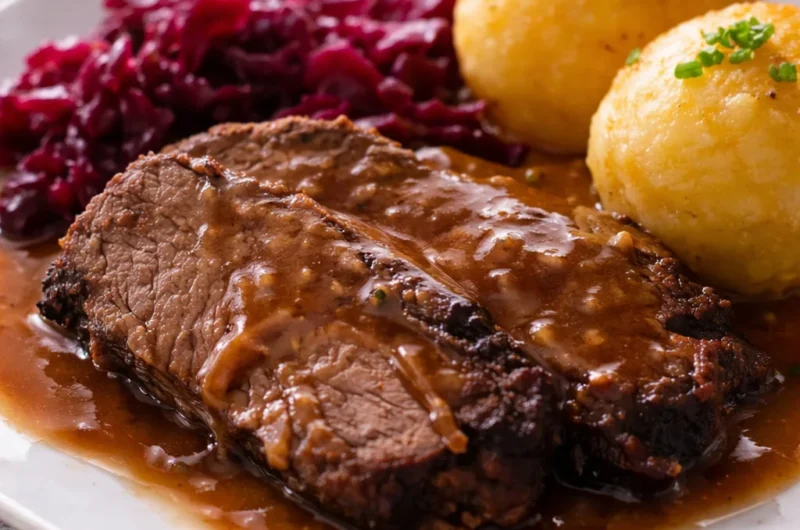





























Traditional Sauerbraten Recipe nights usually happen at my house when I want something cozy but I also do not want to stand over the stove all day. You know that feeling when it is chilly out, you want a real dinner, and takeout just sounds sad? This is the kind of meal that makes your kitchen smell amazing and makes everyone peek in the pot. It does take a little planning because of the marinade, but the actual cooking is simple and forgiving. If you have never made it before, do not worry, I will walk you through it like a friend would. 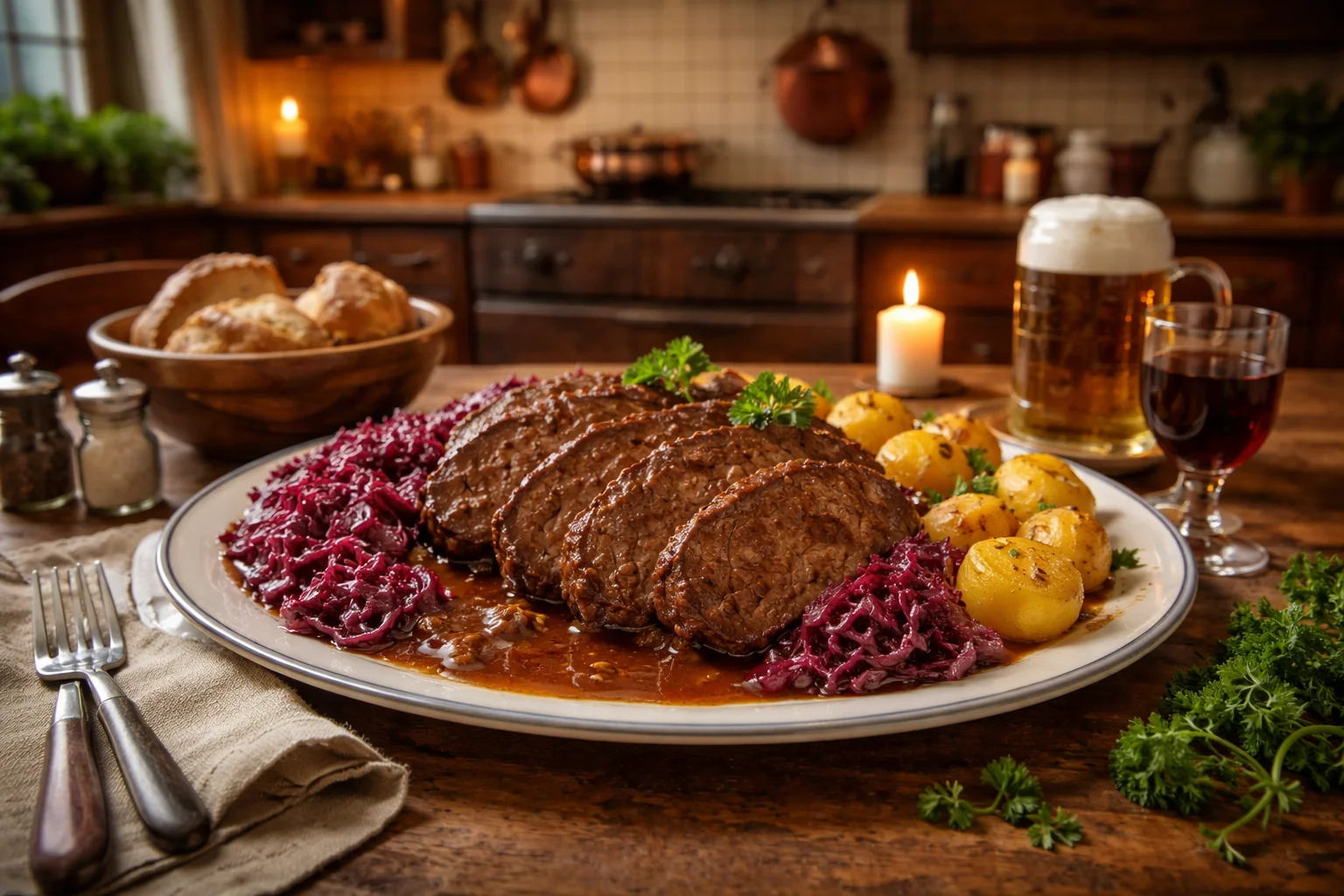
What is Sauerbraten?
Sauerbraten is basically a tender pot roast that gets its signature flavor from a tangy marinade. The word sauer means sour, and that is the whole point: vinegar and spices work their magic over a couple of days, then you slowly cook the beef until it turns spoon tender.
What makes it special is the balance. It is not just sour. It is rich, slightly sweet, warm from spices, and deeply savory. The gravy usually gets thickened at the end and some people add a sweet element like ginger snaps or a bit of sugar to round everything out.
If you like meals that taste even better the next day, this is your dish. I always look forward to leftovers, because the sauce gets even more cozy and blended overnight.
Also, if you enjoy old fashioned comfort food, you might like this too: my easy pot roast dinner guide. Same vibe, different flavor story.
Origin
Sauerbraten is one of those classic German dishes that feels like it has been around forever, because in a way it has. The whole marinating idea came from a practical place: it helped tenderize tougher cuts and helped preserve meat before modern refrigeration.
From what I have read and heard over the years, it became a beloved Sunday dinner and holiday meal, the kind of thing families would plan ahead for. It is not fussy food, it is patient food.
I first tried it at a small German restaurant years ago, and I still remember how the sauce tasted both bright and dark at the same time. When I finally started making it at home, I realized it is not hard, it just asks you to think two or three days ahead.
Little trust moment from a friend who eats at my table a lot:
I thought I did not like vinegar based dishes, but your sauerbraten sauce is the one that changed my mind. It tastes like comfort food, not salad dressing.
Regional Differences
If you go down the sauerbraten rabbit hole, you will notice people get pretty passionate about what is authentic. Honestly, I love that. It is proof that this dish is personal.
Here are a few common variations you will see:
- Rhineland style: often thickened with crushed ginger snaps for a subtle sweetness and a slightly spiced cookie note.
- Southern versions: sometimes lean more on wine in the marinade.
- Different proteins: beef is most common, but you will also see venison or even pork in some homes.
- Spice mix tweaks: more cloves here, more juniper there, or bay leaves plus peppercorns as the main background flavor.
I stick with a straightforward beef version that tastes traditional to me, with a gentle sweet balance at the end. If you are into German classics, you might also enjoy my simple red cabbage side dish because it pairs so naturally with this meal.
How to cook Sauerbraten
This is the part where I promise you it is not intimidating. The big secret is time, not talent. The marinade does the heavy lifting, then the oven or stovetop slowly finishes the job.
What you will need
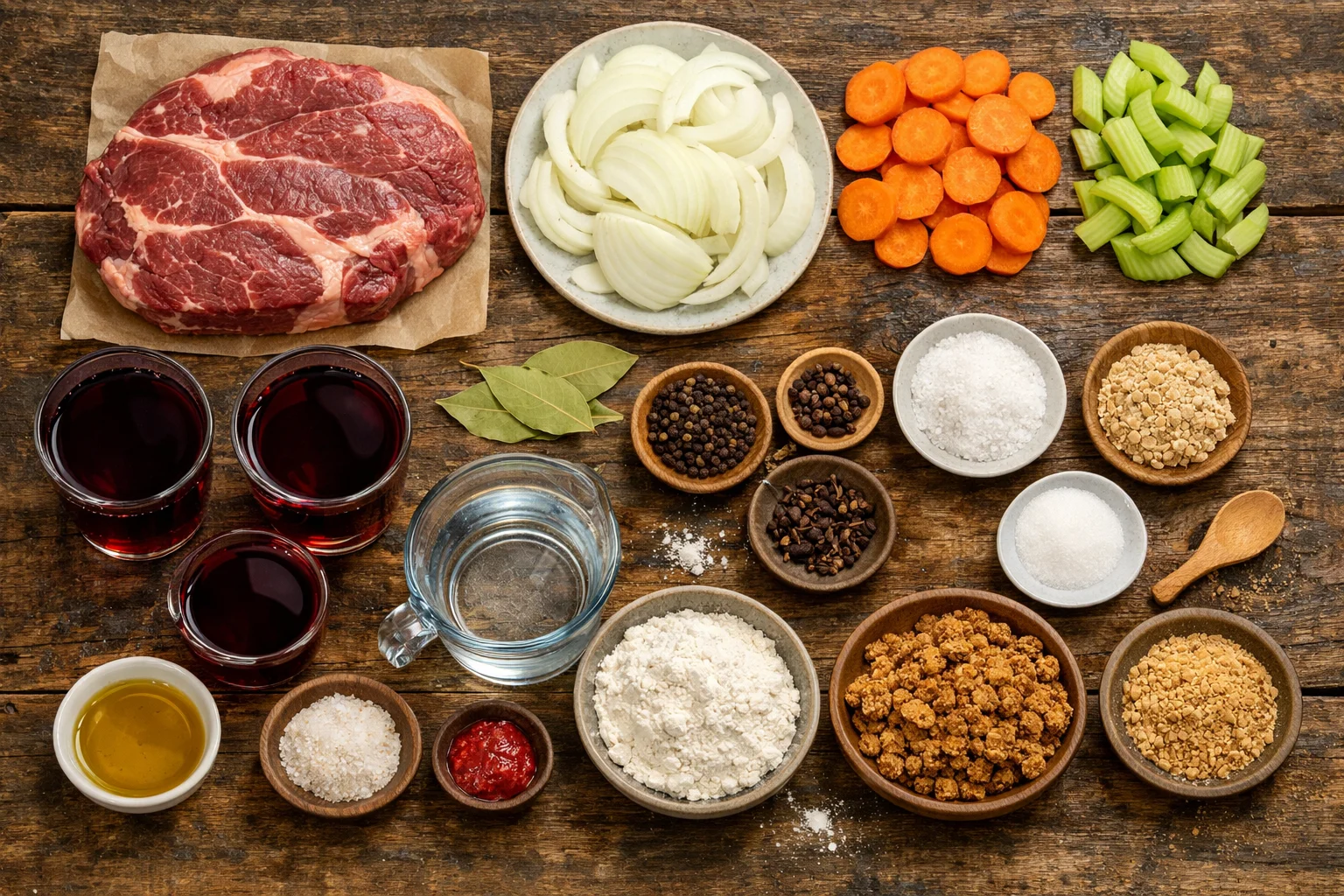
For a cozy, reliable Traditional Sauerbraten Recipe at home, here is what I use. This makes about 6 servings.
- Beef roast: 3 to 4 pounds chuck roast or bottom round
- 1 large onion, sliced
- 1 carrot, sliced
- 1 stalk celery, sliced
- 2 cups red wine (or beef broth if you prefer, but wine adds depth)
- 1 cup red wine vinegar
- 2 cups water
- 2 bay leaves
- 10 to 12 whole peppercorns
- 4 whole cloves
- 1 teaspoon salt
- 2 tablespoons sugar or honey (optional, helps balance)
- 2 tablespoons oil for browning
- 2 tablespoons flour (for thickening)
- 4 to 6 crushed ginger snaps (optional but very traditional tasting)
Marinating the roast
Put the onion, carrot, celery, wine, vinegar, water, bay leaves, peppercorns, cloves, salt, and sugar into a big bowl or a large zip bag. Add the roast and make sure it is mostly submerged. Cover and refrigerate for 2 to 3 days. Flip it once or twice a day if you remember.
Real life tip: set a reminder on your phone to flip it. I forget all the time, and the reminder saves me.
Cooking day step by step
When you are ready to cook, take the roast out and pat it dry. Strain the marinade and save the liquid and the vegetables. You will use them again.
1) Heat oil in a large Dutch oven or heavy pot. Brown the roast on all sides. This adds flavor, so do not rush it.
2) Add the strained vegetables back in around the roast and pour in enough marinade liquid to come about halfway up the meat. Bring to a gentle simmer.
3) Cover and cook low and slow. You can do 3 hours at a low simmer on the stove, or about 325 F in the oven for 3 to 3.5 hours. It is done when it cuts easily with a fork.
4) Remove the roast to rest. Now make the gravy: whisk flour with a little cold water, then stir it into the simmering liquid. Add crushed ginger snaps if using. Simmer until thickened.
5) Taste and adjust. If it is too tangy, add a pinch more sugar. If it feels flat, add a pinch of salt. Then slice the roast and spoon sauce over everything.
If you want another cozy dinner that also feels like it took all day, I have this simple beef stew recipe that is very weeknight friendly.
One more thing: this Traditional Sauerbraten Recipe is one of those dishes where a little tasting at the end matters. Vinegar varies a lot, and some wines are sweeter than others. Trust your tongue.
What to serve with Sauerbraten?
This is where you can really make it feel like a full German style dinner, or keep it totally simple depending on your mood.
My favorites:
- Potato dumplings or egg noodles to soak up the sauce
- Mashed potatoes if you want the easy route
- Red cabbage for that sweet tangy contrast
- Roasted carrots or green beans if you want something lighter
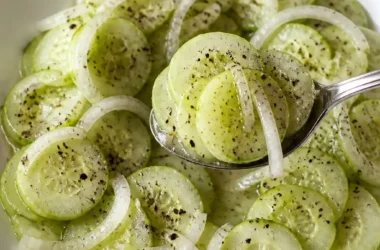
- A simple cucumber salad on the side if you like a fresh crunchy bite
If you are serving guests, I love doing noodles plus red cabbage because it feels special but not complicated. And if it is just family, mashed potatoes are totally allowed. The sauce is the star anyway.
Common Questions
Can I marinate it for just one day?
You can, but it will not taste as deep. Two days is my minimum, three is best if you have the time.
What cut of beef works best?
Chuck roast is my favorite because it gets tender and stays juicy. Bottom round works too, but it can be a bit leaner.
Does it taste really sour?
It is tangy, not puckery. The slow cooking softens the vinegar bite, and a little sweetness at the end makes it balanced.
Can I make it ahead?
Yes, and you should. This is one of those meals that tastes even better the next day. Just reheat gently and add a splash of broth if the sauce thickens too much.
Do I have to use ginger snaps?
Nope. They add a traditional sweetness and help thicken, but flour alone works fine. You can also use a small piece of dark bread if you have it.
A cozy dinner worth planning for
If you have been wanting to try a Traditional Sauerbraten Recipe but kept putting it off, consider this your sign. Marinate it, cook it slow, and let the sauce do its thing. If you want to compare approaches, I found the Traditional Sauerbraten Recipe – Allrecipes version helpful for basics, and How to make Real German Sauerbraten – Days of Jay is a great read for deeper German style detail. Either way, do not stress, your kitchen will smell incredible and your dinner will feel like a little celebration. Let me know how you serve yours, because I am always looking for new side dish ideas. 
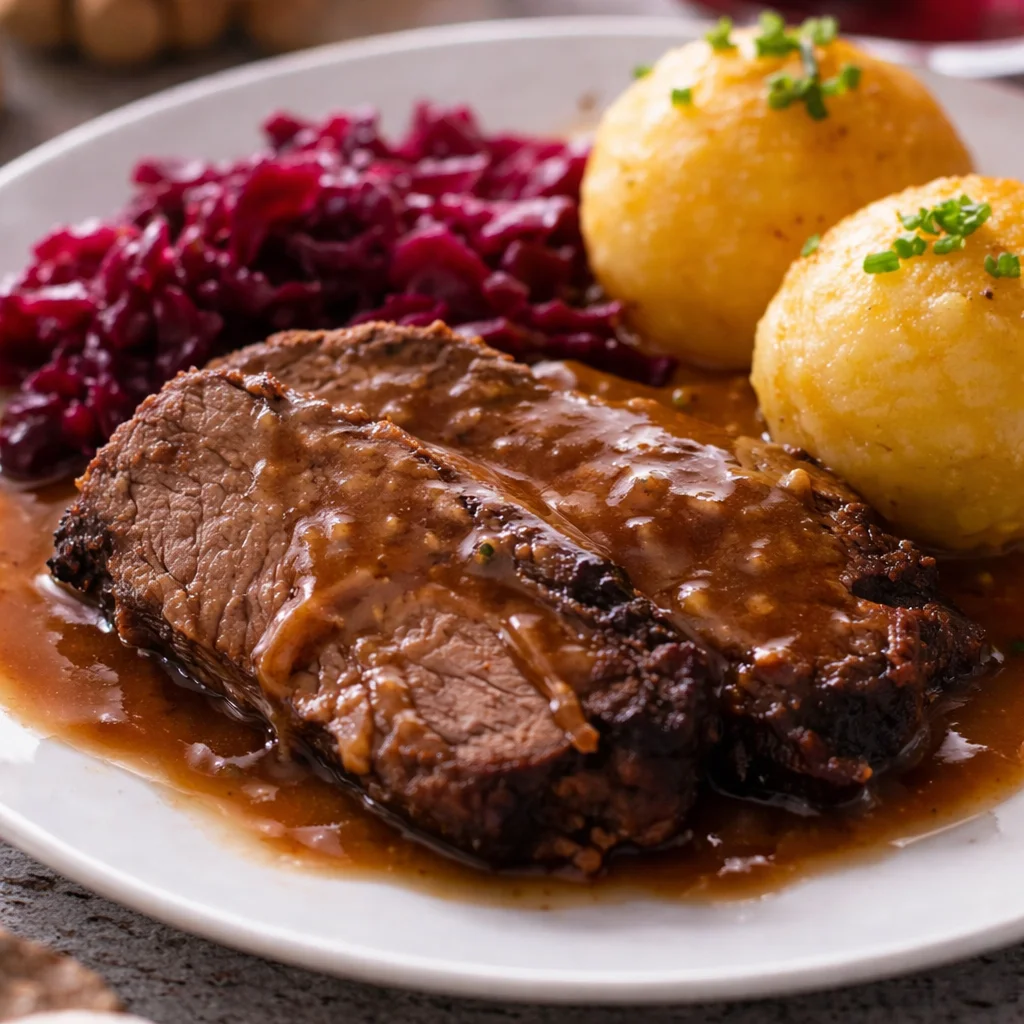
Sauerbraten
Ingredients
Method
- Put the onion, carrot, celery, wine, vinegar, water, bay leaves, peppercorns, cloves, salt, and sugar into a big bowl or a large zip bag.
- Add the roast and make sure it is mostly submerged. Cover and refrigerate for 2 to 3 days, flipping it once or twice a day if you can.
- Take the roast out and pat it dry.
- Strain the marinade and save the liquid and the vegetables.
- Heat oil in a large Dutch oven or heavy pot. Brown the roast on all sides.
- Add the strained vegetables back in around the roast and pour in enough marinade liquid to come about halfway up the meat. Bring to a gentle simmer.
- Cover and cook low and slow. You can do 3 hours at a low simmer on the stove, or about 325°F in the oven for 3 to 3.5 hours.
- Once cooked, remove the roast to rest. To make the gravy, whisk flour with a little cold water, then stir it into the simmering liquid. Add crushed ginger snaps if using, and simmer until thickened.
- Taste and adjust. If it is too tangy, add a pinch more sugar. If it feels flat, add a pinch of salt. Then slice the roast and spoon sauce over everything.