
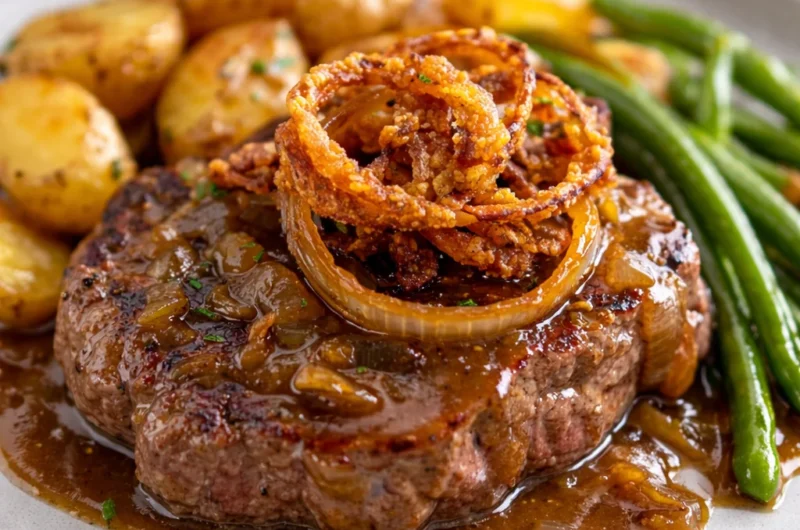













Traditional Zwiebelrostbraten (German Onion Beef Roast) is the kind of meal I crave when I want something hearty, cozy, and honestly a little impressive without being fussy. You know those days when you are bored of chicken, tired of pasta, and you just want a real plate of food with a deep sauce and something crispy on top? That is exactly where this dish comes in for me. The first time I made it at home, my kitchen smelled like a tiny German guesthouse, in the best way. If you have ever struggled to get steak and onions to feel like a complete, comforting dinner, you are in the right place. Let me walk you through my take on it, like I would if you were hanging out at my table.
What is Zwiebelrostbraten?
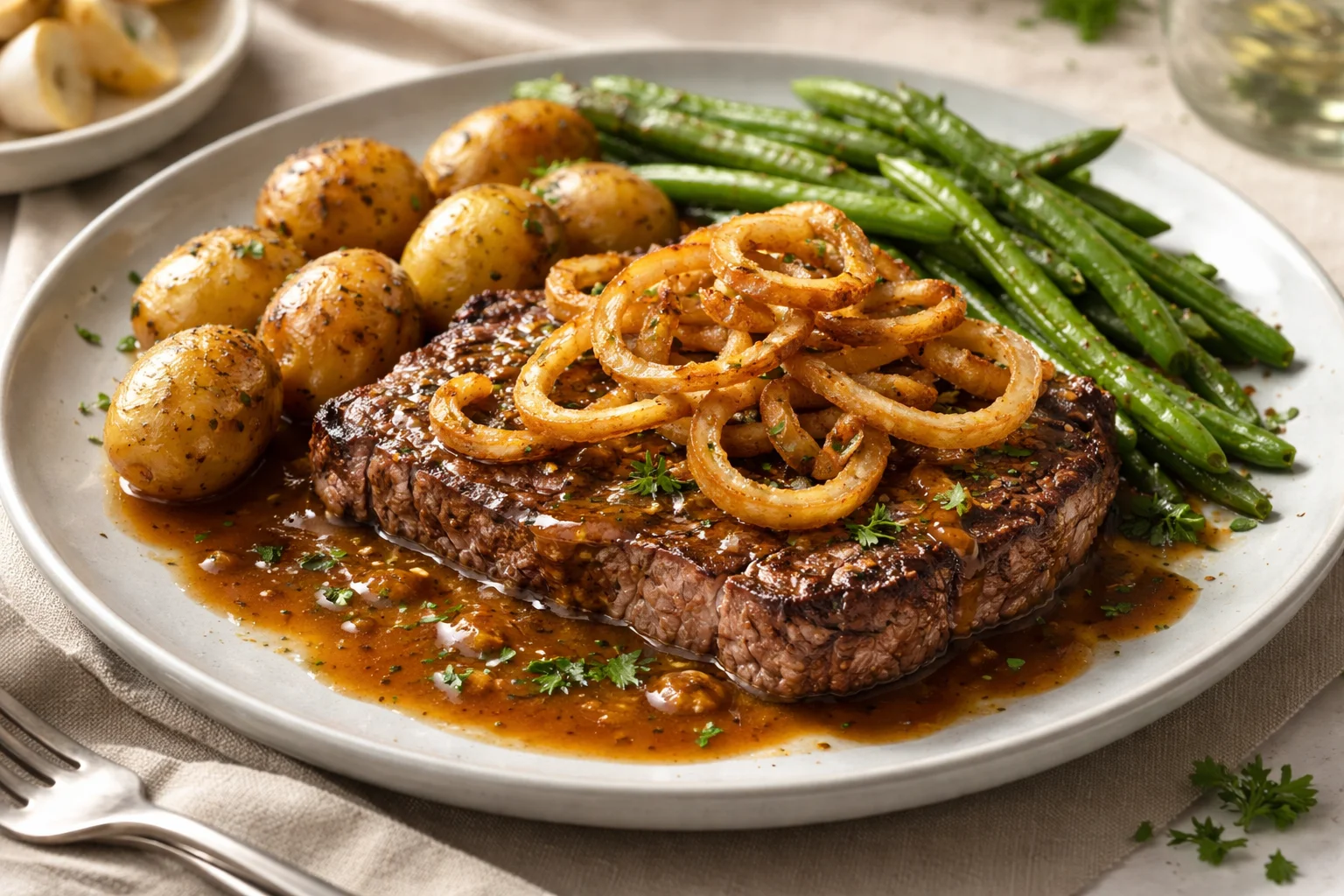
If you have never had it, Traditional Zwiebelrostbraten (German Onion Beef Roast) is basically tender pan roasted beef served with a rich brown roast sauce and topped with lots of crispy fried onions. It is simple on paper, but the magic is in the timing and the little steps that build flavor. In many versions, the beef is more like a steak cut than a long braise, so you get that juicy bite plus a sauce that tastes like it has been simmering all day.
The word looks intimidating, but the idea is friendly: onions, beef, sauce, and a classic side like Spätzle. I like it because it feels like restaurant food, yet it is totally doable on a weeknight if you are organized. Also, it is one of those plates where every bite can be a little different depending on how much onion you scoop up.
When I serve this to friends, I always warn them: the crispy onions are dangerously snackable. I have to make extra because people pick at them while I am finishing the sauce.
Historical Background
Zwiebelrostbraten is often connected to southern Germany, especially Swabia, where Spätzle is basically a way of life. From what I have learned over time, it started as a practical but special meal: good beef, onions that were easy to store, and a sauce made from pan juices so nothing went to waste. It is the kind of food that makes sense in a home kitchen, not just in a fancy dining room.
I love dishes like this because they carry that old school logic: use what you have, make it taste amazing, and feed people well. When you sear beef in a hot pan and then build a sauce in the same pan, you are doing what cooks have done forever. That little browned layer on the bottom is pure flavor, and it is free.
If you are curious about other cozy German style roasts, I keep a few notes and variations on my site, like this one on German beef roast tips that helped me understand the sauce part better over the years.
The Perfect Combination: Beef, Spätzle, Roast Sauce and Fried Onions
This is the part where Traditional Zwiebelrostbraten (German Onion Beef Roast) really becomes a full experience. It is not just beef and onions. It is the tender meat, the soft and chewy Spätzle, the savory sauce that ties it together, and the fried onions that bring crunch. You get salt, richness, sweetness from onions, and that comfy carb situation all in one plate. It is honestly hard to beat.
My go to ingredients and what you will need
I am keeping this realistic and home friendly. You do not need a ton of specialty stuff, but a few basics matter.
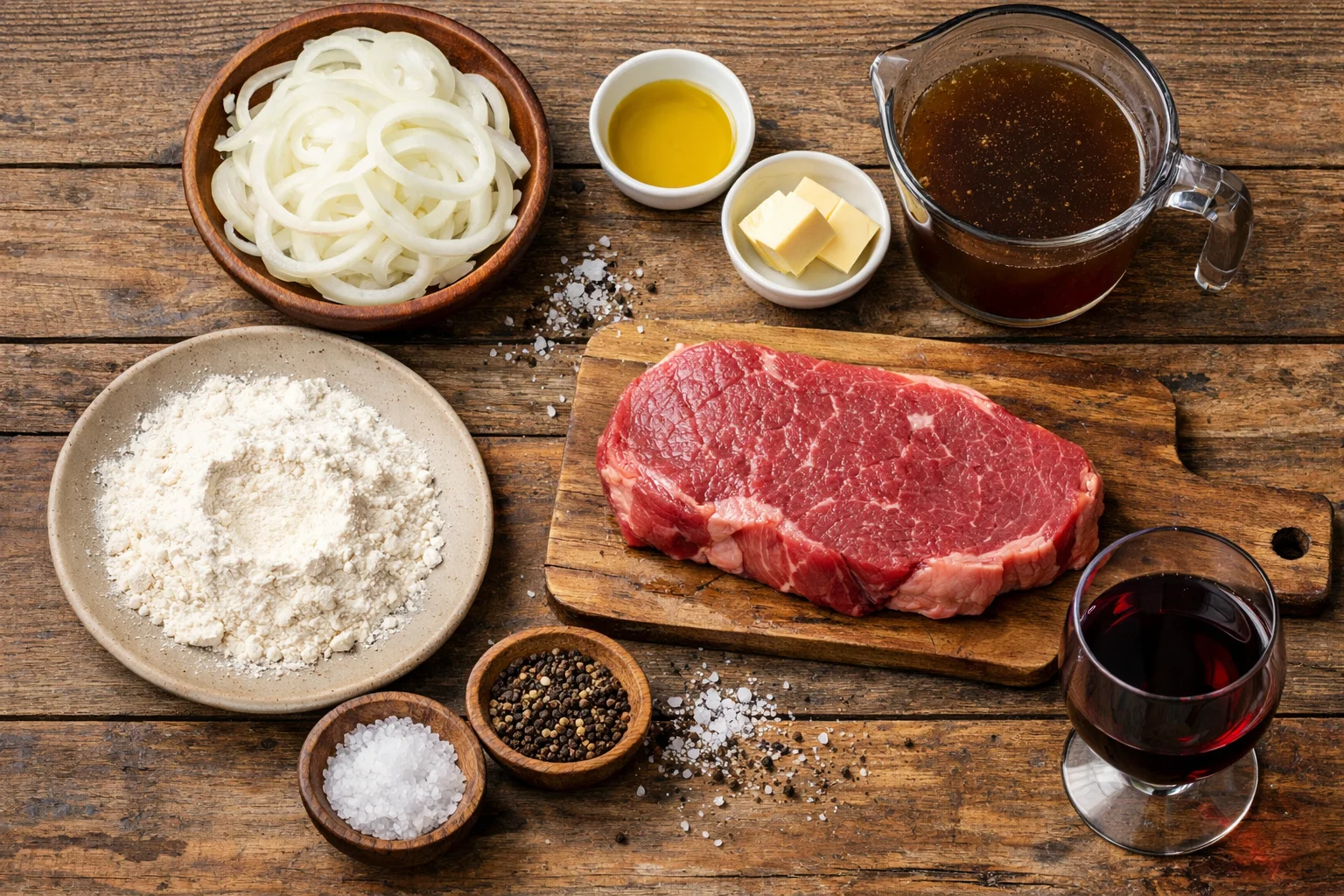
- Beef: I like rump steak, sirloin, or a similar cut that cooks fairly quickly but still stays juicy
- Onions: 2 to 3 big ones, sliced thin
- Flour or cornstarch: for lightly coating onions and thickening sauce if needed
- Beef broth: low salt if possible so you can control seasoning
- Butter and oil: oil for frying onions, butter for flavor in the pan
- Salt and pepper: simple but important
- A splash of something: optional, but a little red wine or a tiny bit of vinegar can wake up the sauce
- Spätzle: homemade or store bought, whatever fits your day
How I cook it without stress
Here is my rhythm. I used to try to do everything at once and ended up with soggy onions or overcooked beef. Now I do it in a calmer order.
1) Fry the onions first. Slice them thin, toss with a little flour, and fry in hot oil until golden and crisp. Do not crowd the pan. Drain on paper towels and salt them right away. Make more than you think you need.
2) Cook the beef next. Pat it dry, season well, and sear in a hot pan with a bit of oil and butter. You want a good brown crust. Cook to your preferred doneness, then pull it out to rest. Resting is not optional if you want juicy meat.
3) Build the roast sauce in the same pan. Lower the heat, add a bit more butter if the pan is dry, then pour in broth and scrape up the browned bits. Simmer until it tastes rich. If you want it thicker, whisk in a little cornstarch slurry. Taste and adjust salt and pepper.
4) Spätzle timing. If you are using store bought, I warm it near the end. If you are making it fresh, I do that while the sauce simmers, but only if I am feeling ambitious.
5) Assemble. Spätzle on the plate, beef on top, sauce over the meat, and then a big pile of fried onions. The onions should stay crisp, so I add them at the very last second.
One more practical tip: if your sauce tastes flat, it usually needs either a little more simmer time or a tiny splash of acidity. Just a little. You are not trying to make it sour, just more alive.
Also, if you like collecting side dish ideas, I have a simple guide on Spätzle serving ideas that pairs really nicely with this.
;
“I ordered Zwiebelrostbraten on a trip once and thought I would never recreate it at home. This version got me surprisingly close, and the crispy onions were the best part.”
The Cultural Significance of Zwiebelrostbraten
To me, Traditional Zwiebelrostbraten (German Onion Beef Roast) is comfort food with a bit of pride baked in. It is the kind of dish people order when they want something regional and satisfying, not trendy. In places where it is common, it is tied to family meals, local inns, and that feeling of sitting down after a long day to a plate that actually fills you up.
I also think it is a perfect example of balance. There is nothing fancy like foams or complicated plating. It is just solid cooking: browning, simmering, seasoning, and letting onions do what onions do best.
When I make it for someone who has never tried it, they usually have the same reaction: they expect it to be heavy, but it is actually pretty lively because of the onions and the savory sauce. It is rich, yes, but it does not feel boring.
If you are into old school comfort meals, you might also like my post on classic pan sauce basics because the method overlaps and it makes you feel way more confident at the stove.
Where to Find Authentic Zwiebelrostbraten?
If you want the real deal, your best bet is often southern Germany, especially Swabia and nearby regions, where it shows up on menus in traditional restaurants. Look for places that also serve Spätzle, Maultaschen, or other regional staples. That is usually a good sign you are in the right neighborhood food wise.
Outside Germany, some German or Austrian restaurants do a solid version, but it can vary. Sometimes the onions are more like soft caramelized onions instead of crispy fried onions. Still tasty, just different. If you are ordering and you care about the crunch, it is totally fine to ask how they do the onions.
Honestly though, the most reliable way to get it exactly how you like is to make it yourself. Once you nail the onion timing and learn how to build the roast sauce from the pan, you can recreate that cozy restaurant vibe at home anytime you want.
Common Questions
Can I make Traditional Zwiebelrostbraten (German Onion Beef Roast) with a different cut of beef?
Yes. Sirloin, rump steak, or even ribeye works. Just adjust cooking time so it stays tender. If you go with a tougher cut, you may need a longer, slower cook, and it becomes more like a braise.
How do I keep the fried onions crispy?
Fry in small batches, keep the oil hot, and drain well. Salt them right after frying. Most important, do not put them on the beef until the last moment.
My sauce is too thin. What should I do?
Let it simmer a bit longer first. If it still needs help, whisk in a small cornstarch slurry and simmer for one more minute, then re taste.
Can I prep anything ahead of time?
You can slice onions and even fry them earlier in the day. Store them uncovered or lightly covered so they do not steam. Re crisp for a minute in the oven if needed.
What should I serve with it besides Spätzle?
Roasted potatoes, mashed potatoes, or a simple salad works great. I like something fresh and a little acidic on the side to balance the richness.
A cozy plate worth making at home
If you have been wanting a classic German comfort meal that feels special but still doable, Traditional Zwiebelrostbraten (German Onion Beef Roast) is a great one to try. Focus on three things and you will be in good shape: a good sear on the beef, a sauce built from the pan, and truly crispy onions. If you want to explore more roast inspiration, I enjoyed reading Culinary Legacy: My Mother’s Rindsbraten Beef Roast for that homey, lived in vibe, and Traditional Allgäuer Zwiebelrostbraten – Cooking The World for a regional take. Give it a shot, make it your own, and do not be surprised if this becomes one of those recipes you come back to when you want to treat yourself.
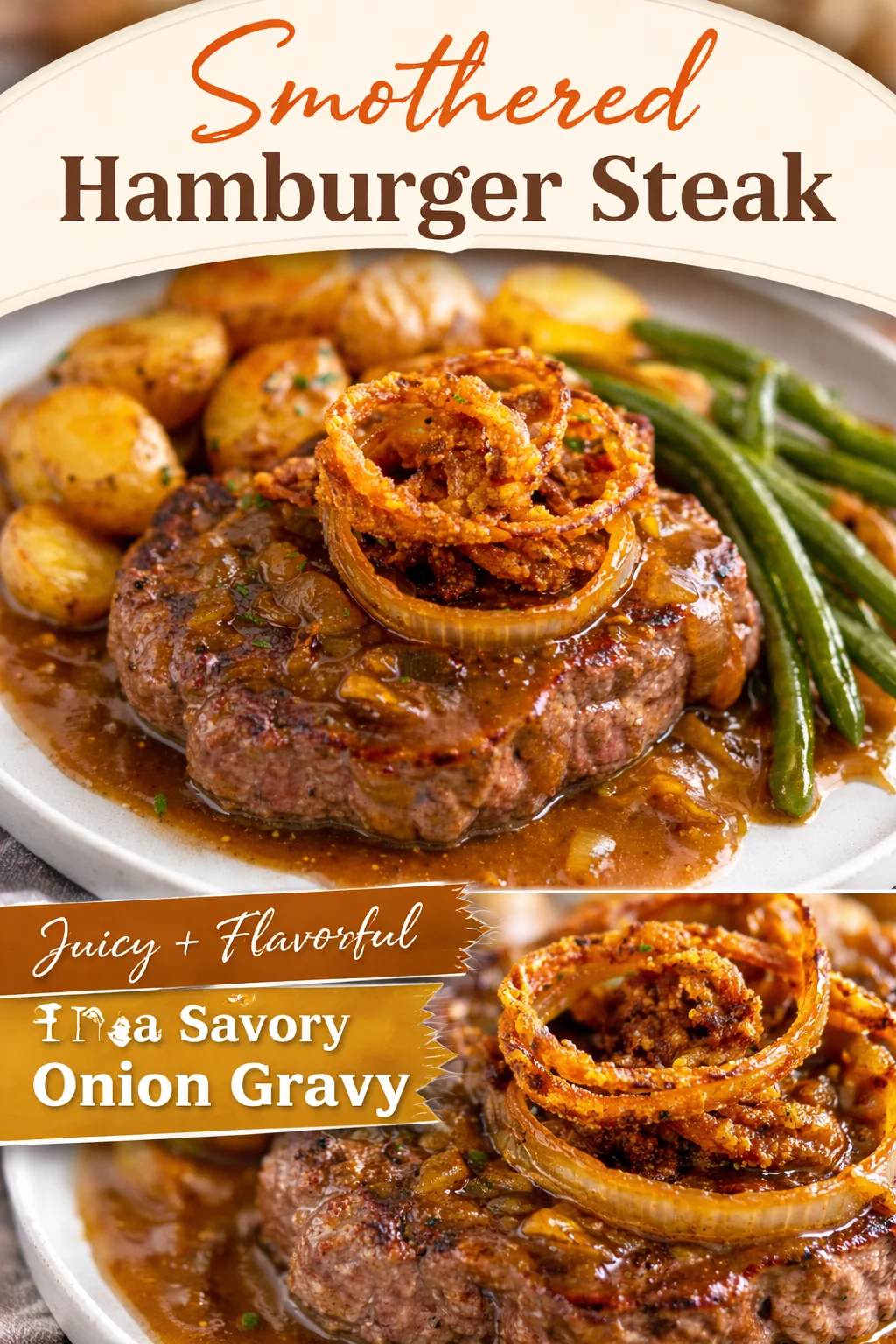
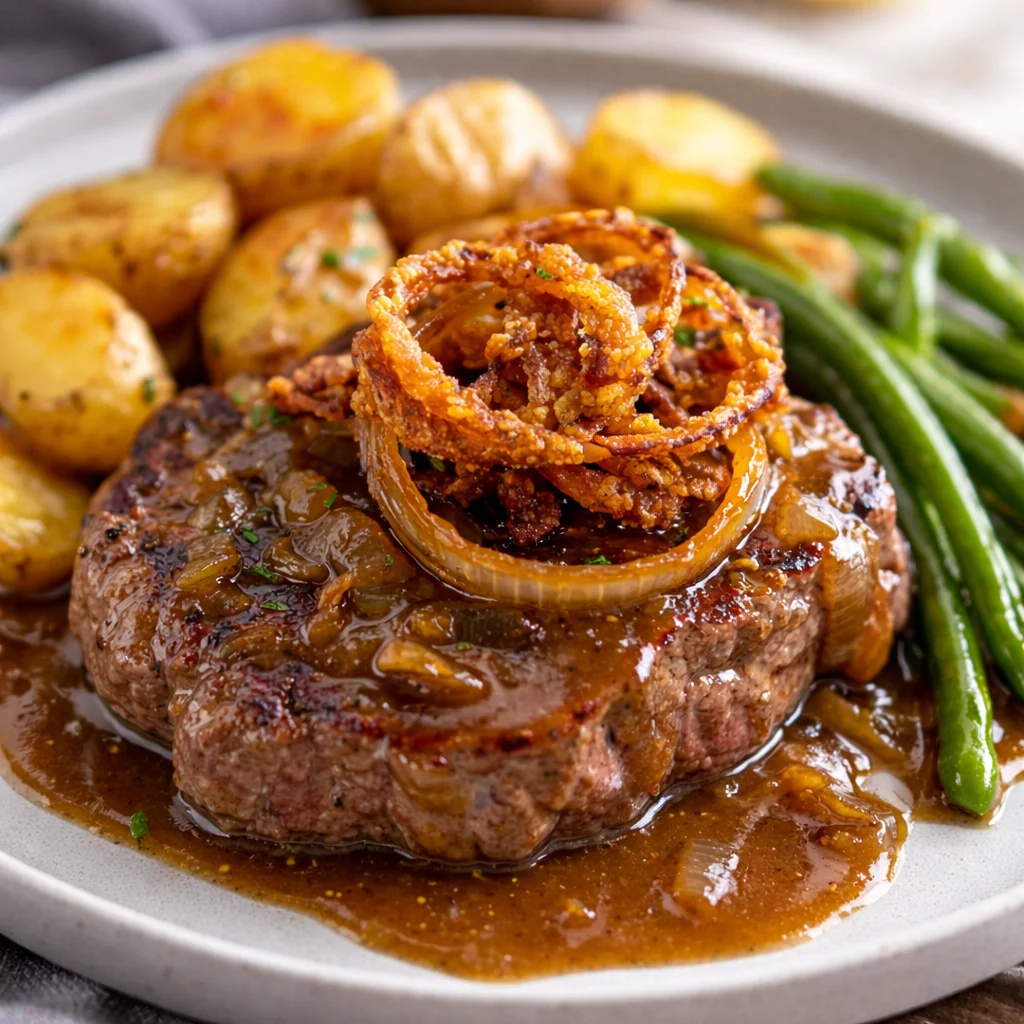
Zwiebelrostbraten
Ingredients
Method
- Fry the onions first. Slice them thin, toss with a little flour, and fry in hot oil until golden and crisp. Do not crowd the pan. Drain on paper towels and salt them immediately.
- Cook the beef next. Pat it dry, season well, and sear in a hot pan with a bit of oil and butter until a good brown crust forms. Cook to your preferred doneness, then pull it out to rest.
- Build the roast sauce in the same pan. Lower the heat, add a bit more butter if the pan is dry, then pour in the broth and scrape up the browned bits. Simmer until it tastes rich.
- If you want the sauce thicker, whisk in a little cornstarch slurry. Taste and adjust salt and pepper.
- Prepare Spätzle. If store-bought, warm it near the end. If making fresh, do that while the sauce simmers.
- Assemble the dish: plate the Spätzle, place the beef on top, pour sauce over the meat, and finish with the fried onions.